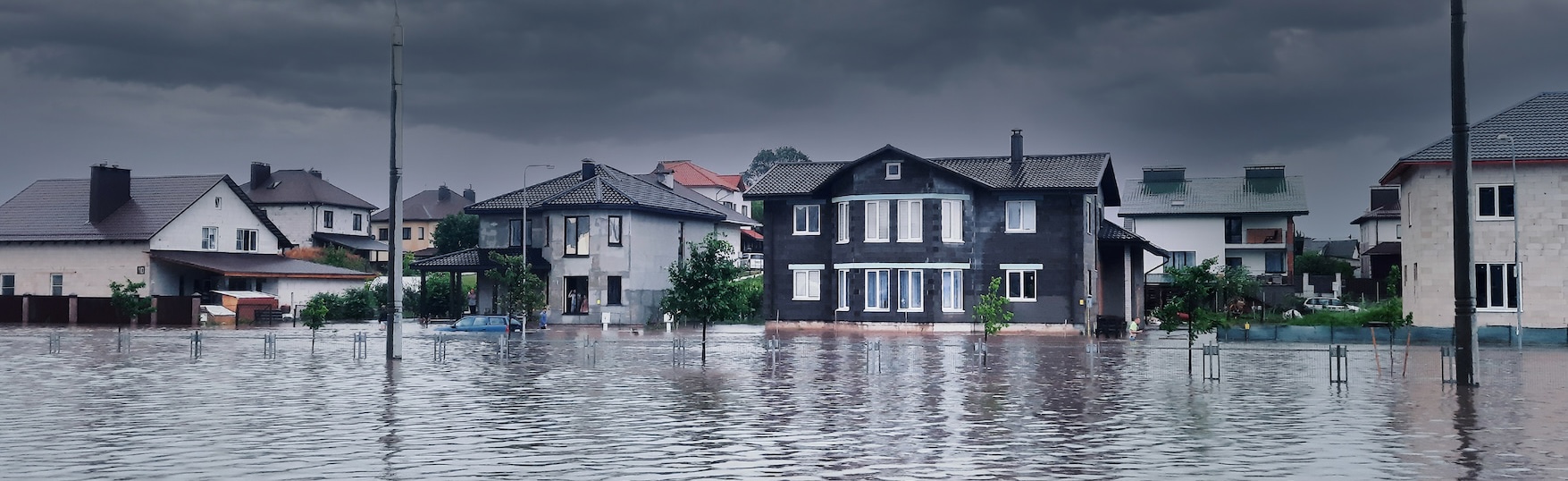
Using spray foam in the construction of homes and commercial structures can help make them stronger, more resilient, and mitigate repair costs caused by climate and other natural disasters.
Spray Foam Insulation and Hurricanes
Built-In Storm Protection
Using spray foam insulation to create an unvented attic offers unique advantages in regions vulnerable to hurricanes. Because spray foam is applied directly to the roof deck, it forms a continuous, bonded layer, improving a building’s ability to withstand high wind loads and reduces the risk of wind uplift—a leading cause of roof failure during hurricanes. In addition, the foam’s ability to seal against air and water intrusion helps prevent the rapid pressurization and moisture damage that often lead to catastrophic structural failure.
By strengthening the roof-to-wall connection and adding rigidity to wall assemblies, spray foam can enhance a building’s overall resilience. For homeowners and building owners in hurricane zones, this added protection provides both structural security and peace of mind.
Spray Foam Roofs
Strength that Lasts
A spray foam roofing system can significantly improve a building’s strength and provide a service life of more than 30 years.¹
Spray foam conforms and adheres to the surface on which it is applied, creating a continuous, seamless layer that bonds tightly to the roof. Unlike traditional roofing systems that rely on fasteners and seams, spray foam eliminates weak points where water can penetrate. This not only enhances durability and water resistance but also helps the roof withstand high winds and reduce the risk of wind uplift during hurricanes and severe storms.
Spray Foam Insulation
Strength and Resilience
The Federal Emergency Management Agency (FEMA) classifies spray foam insulation as highly resistant to floodwater damage, noting that:
“These materials can survive wetting and drying and may be successfully cleaned after a flood to render them free of most harmful pollutants.”²
Closed-cell spray foam strengthens wall assemblies by adhering directly to the surfaces within the cavity, creating a rigid, bonded layer. Walls containing spray foam insulation maintain their shape and integrity under stress more effectively than conventional wall assemblies.³ In hurricane-prone regions, this added resilience can make wall systems more resistant to structural strain, air leakage, and water intrusion caused by extreme wind and pressure changes.3
Using closed-cell spray foam can help ensure your roof deck stays securely in place when faced with inclement weather.
Footnotes
- Mason Knowles, “Specifying SPF Roofing Systems” September 2005
http://masonknowles.com/docs/SpecifiyingSPFRoofingSystems.pdf - “Flood Damage-Resistant Materials Requirements” FEMA Technical Bulletin 2, August 2008. Available at https://www.fema.gov/sites/default/files/documents/fema_tb_2_flood_damage-resistant_materials_requirements.zip
- https://www.cufca.ca/get_document.php?document_id=40