-
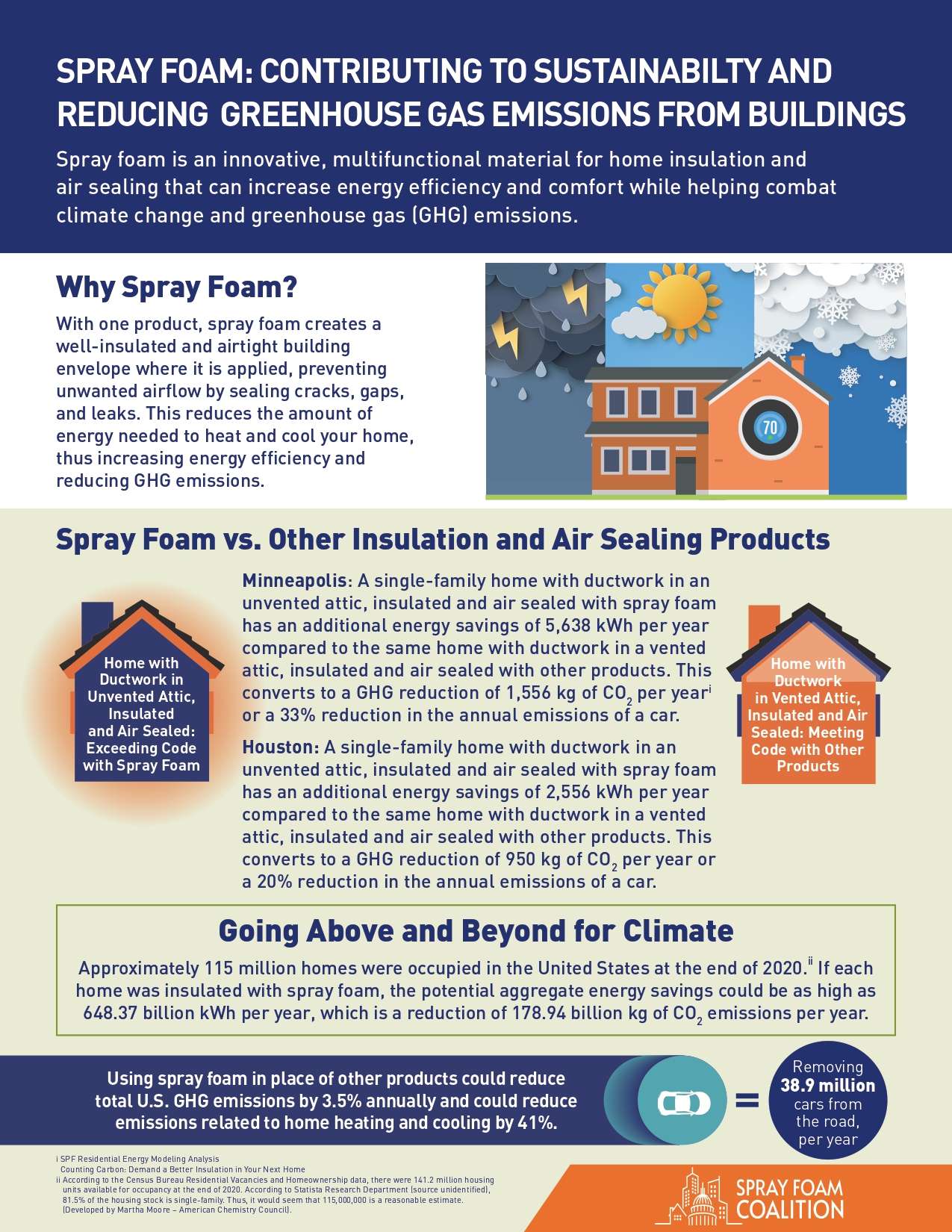
Greenhouse Gas Emission Reductions
Did you know that a single-family home in Minneapolis, Minn. with ductwork in an unvented attic, insulated and air sealed with spray foam saves — on average — 5,638 kWh per year more than the same home with ductwork in a vented attic, insulated and air sealed with other products? That converts to a GHG reduction of 1,556 kilograms (kg) of carbon dioxide (CO2) per year, which is equivalent to reducing a car’s emissions by 33% annually! more. Read More
-

Spray Foam Insulation: Helping Create Stronger Buildings
Spray foam improves the resiliency and durability of buildings in a variety of ways against a variety of natural disasters, including flooding, high wind events, and wildfires. Learn more in this document. Read More
-

Why Spray Foam?
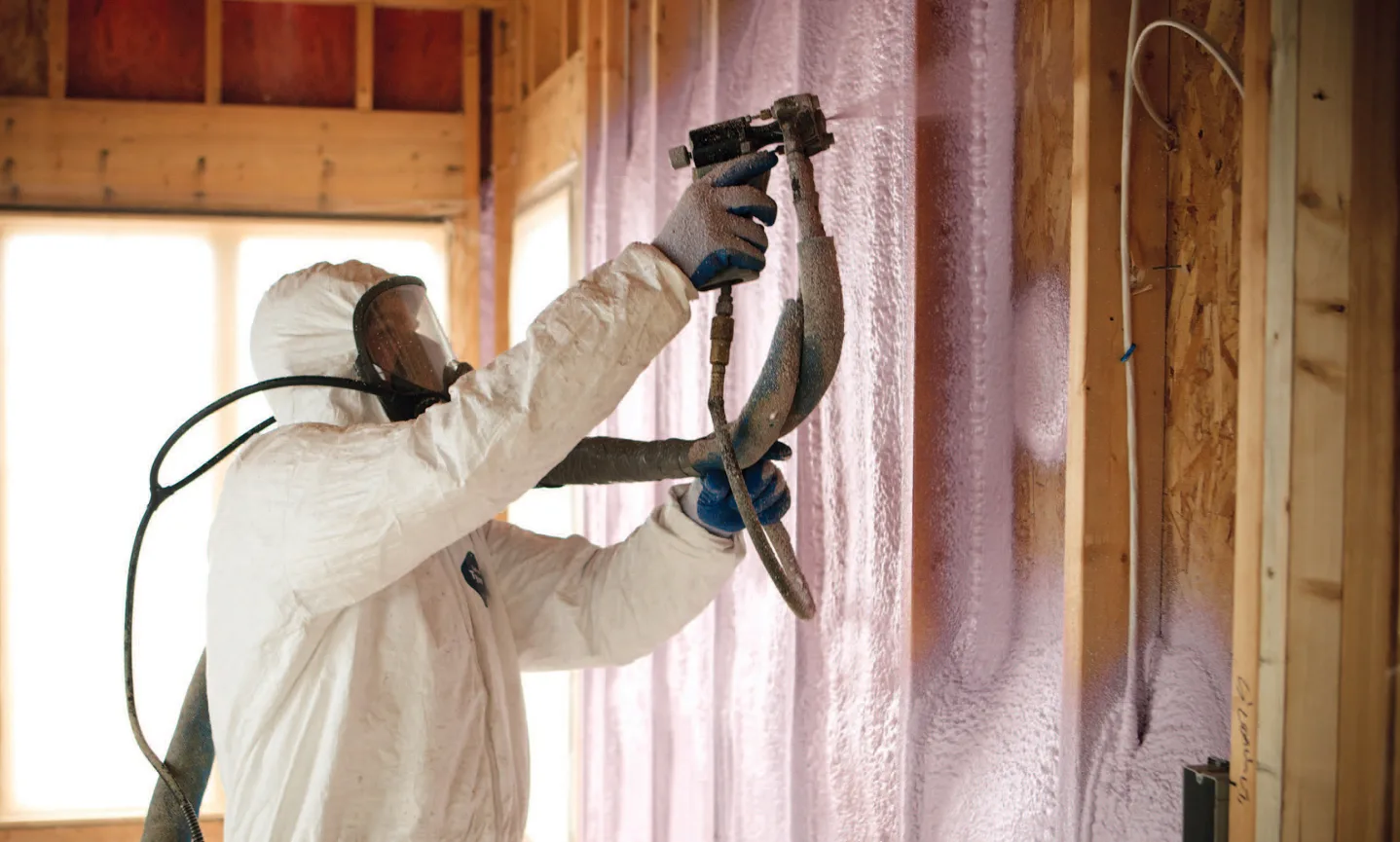
Learn how spray foam can help improve the energy efficiency of your home. Read More
-

CPI’s Health and Safety Website
Learn more about the health and safety considerations for spray foam at www.spraypolyurethane.org. Read More
-

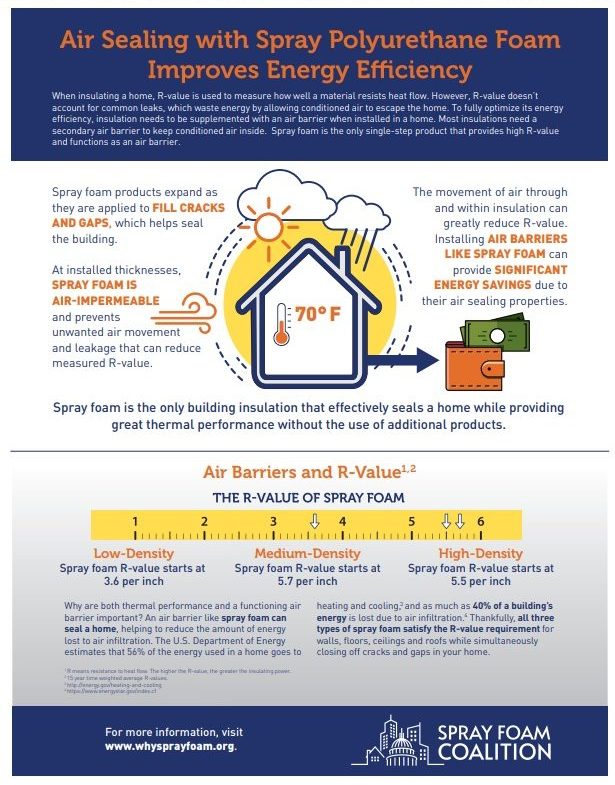
Air Sealing with Spray Polyurethane Foam
Spray foam is the only single-step product that provides high R-value and functions as an air barrier. Most insulation doesn’t account for common leaks, which waste energy by allowing conditioned air to escape the home. To fully optimize its energy efficiency, insulation needs to be supplemented with an air barrier when installed in a home. Learn More here. Read More
-

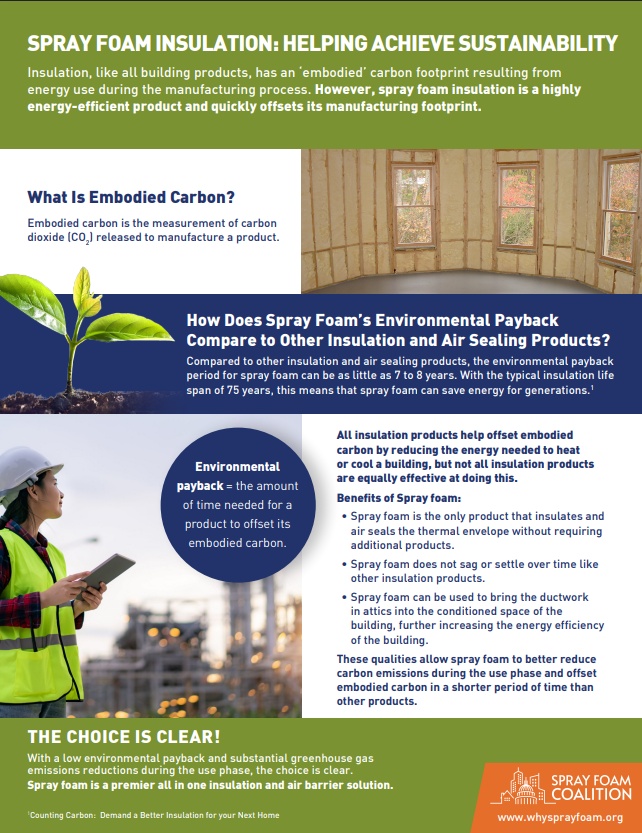
Spray Foam Insulation: Helping Achieve Sustainability
Spray foam insulation is a powerful insulator. In fact, spray foam insulation saves more energy than is used to create it. Spray foam insulation has a low embodied carbon and and a short environmental payback. Learn More here. Read More