Resilient design is an approach in construction that creates buildings and communities able to withstand, adapt to, and recover from natural disasters, extreme weather, and other disruptive events. In addition to superior energy efficiency and air-sealing, spray foam insulation has been an important tool contributing to resilient design principles for decades.
Unvented attics with spray foam insulation have a proven track record in homing hardening against extreme weather events, outperforming traditional vented attics in the face of hurricanes, wildfires, and even routine rainstorms.
Enhanced Durability in Hurricanes and High Wind Events
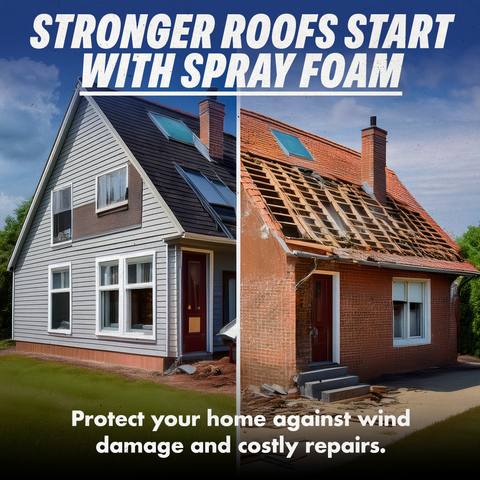
How it Works with Closed Cell Spray Foam Insulation: Closed cell Spray foam insulation is a rigid dense foam that adheres strongly to all common building materials. When applied directly to the underside of the roof deck the foam effectively “glues” the entire roof structure together. This secondary structural reinforcement for the roof deck resist wind uplift forces and sheathing detachment during extreme wind events. Keeping the roof deck in place is paramount to a home’s survival during a hurricane.
How it Works with Open Cell Spray Foam Insulation: The adhesive properties of spray foam insulation works synergistically with the unvented attic design by eliminating air movement into the attic space through the vents at the ridge, eaves, or soffits. These vents, in traditional attics, bring air into the attic space to ventilate the home. Sealing the attic from the exterior environment keeps wind pressure from building inside the attic. Helping to protect the integrity of the roof deck during hurricanes and high wind events.
Real-World Example: The Sand Palace in Mexico Beach, Florida, famously survived the Category 5 winds of Hurricane Michael while nearly every other home on the beach was destroyed, a testament to its robust construction, which included an unvented assembly.
Protection from Wildfires and Ember Intrusion

How it Works: Homes destroyed during a wildfire are not engulfed by a “sea” of flames. Typically, burning embers are blown into vented attics and the embers ignite dry wood exposed in the attic. This is a vulnerability designed into vented attics.
Vented attics are designed to draw air into the attic through the soffit and ridge vents. In wildfire setting these same vents act as direct conduits for burning embers to enter and ignite the home from the inside.
By contrast, an unvented attic assembly eliminates all roof-level vent openings, creating a sealed environment that prevents hot embers from being carried into the attic by the air-movement. This is a critical defense in areas prone to wildfires, protecting your most valuable asset.
Real-World Example: A home built with an unvented attic, insulated an air sealed with spray foam, in the Rustic Canyon neighborhood of Los Angeles was noted for surviving the Palisades fire while many nearby homes were lost, demonstrating the effectiveness of sealed assemblies in preventing structure-igniting ember showers.
A Reliable Secondary Water Barrier

How it Works: All roofing systems are exposed to the elements daily, and even the best systems can fail over time. When a primary roof system is compromised (e.g., a missing shingle, a fastener hole), the layer of closed-cell spray foam applied to the roof deck acts as a secondary, highly water-resistant barrier. This is a non-sacrificial backup system that keeps bulk water from entering the attic and home, minimizing damage until the primary roof can be repaired.
Conclusion: Investing in an unvented attic is an investment in your home’s long-term resilience. By integrating the highest standards of energy performance with superior structural and moisture protection, this system offers a robust defense against the escalating threat of severe weather, providing homeowners with unparalleled peace of mind to better weather the storms