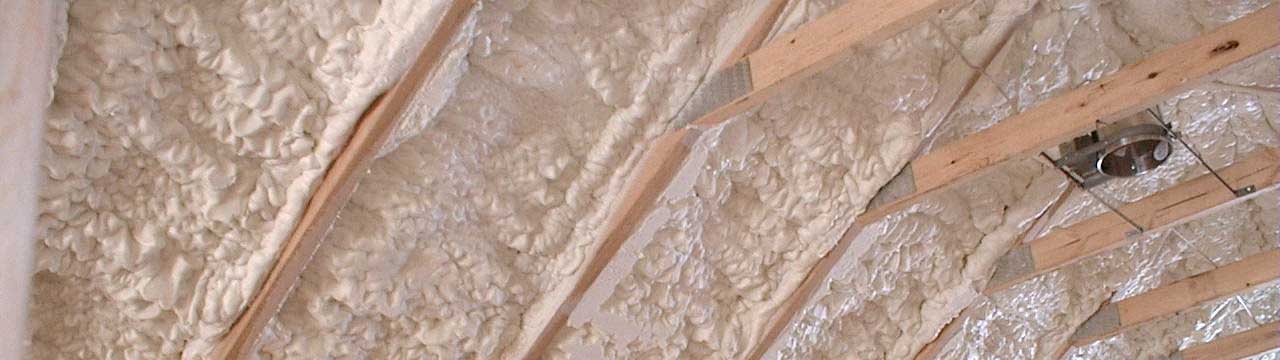
Spray foam is a unique building envelope product that can provide insulation, an air barrier, and a moisture barrier where applied without the need for additional materials. The product is applied on-site, so it conforms to the surface where it is applied. This application process creates a tight building envelope, which can help improve energy efficiency, reduce greenhouse gas emissions associated with heating and cooling, and reduce utility costs for consumers.
What is spray foam?
Spray polyurethane foam (SPF) is a spray-applied plastic that can form a continuous insulation and air sealing barrier on walls, roofs, around corners and other surfaces. SPF insulation is known to resist heat transfer extremely well and offers a highly effective solution in reducing unwanted air infiltration.
How can spray foam help your home?
Spray foam can insulate and seal your home to keep conditioned air from leaking to the outside, which can help lower your energy bills by 5% to 30% per year. Spray foam can help increase the structural integrity of your home by providing additional building strength and lowering maintenance costs. It can make your home more comfortable by decreasing drafts and keeping all the rooms in your home the same temperature. Spray foam can help improve indoor air quality by preventing allergens and moisture from entering your home as well as conform to the unique design of your home. It also allows homeowners to select smaller HVAC equipment for new construction properties.
Which areas of your home can spray foam be installed in?
Spray foam is versatile and can seal wall cavities, exterior walls, crawlspaces, attics, and small gaps and cracks throughout a house. Additional spaces that can be sealed with spray foam include the area behind knee walls, attic hatches, wiring holes, plumbing vents, open soffits, recessed lights, furnace flue or duct chaseways, basement rim joists, windows and doors. Spray foam products can limit air infiltration and air movement throughout the home, which helps reduce energy usage, limits intrusion of pollutants and allergens, and makes the home more comfortable.
How does spray foam help with energy efficiency?
As much as 40% of a building’s energy is lost due to air infiltration. Gaps, holes and air leaks can make energy bills unnecessarily high. Spray foam performs as both insulation and an air barrier, closing gaps that let air escape and add dollars to monthly energy bills. As much as half of the energy used in a home goes to heating and cooling, according to EPA. Maintaining an optimal heating, ventilating, and air conditioning (HVAC) system can make your home more energy efficient. With spray foam, HVAC sizing can be reduced by up to 35%.
Are there any tax incentives for installing spray foam insulation?
The 25C tax credit provides a credit to homeowners for installing certain energy-efficient insulation, windows, doors, roofing, and similar energy-savings improvements. It was recently extended through 2032.
Beginning on January 1, 2023, the expanded 25C provides a 30% tax credit (up to $1,200 annually) to consumers who take certain steps to make their homes more energy efficient.
The expanded 25C also provides that air sealing materials can qualify for the credit. This is important because air sealing and insulation work together to maximize energy savings, which is why the EPA Home Performance with Energy Star program recommends that, for example, the attic floor be air sealed before installing more insulation.*
Homeowners can apply for the 25C tax credit by filling out IRS Form 5695, Residential Energy Credits, while doing their federal tax return. For information about Form 5695 or to find the actual form, visit: www.irs.gov/forms-pubs/about-form-5695.
The 45L tax credit is an incentive provided for new residential building construction. Beginning January 1, 2023 through December 31, 2032, a tax credit of $2,500 is provided to buildings that meet the new EnergyStar programs. An increased credit of $5,000 is provided for each home meeting the requirements of the Department of Energy’s Zero Energy Ready Home program.
Homebuilders can apply for the 45L tax credit by filling out IRS Form 8908, Energy Efficient Home Credit, while doing their federal tax return. For information about Form 8908 or to find the actual form, visit: https://www.irs.gov/forms-pubs/about-form-8908. Note: This information is subject to change as the IRS issues new guidance.
Are there any health or safety considerations when installing spray foam insulation?
There are several existing safety and health guidelines for the spray foam installation process on items like personal protective equipment use and OSHA guidelines. Extensive information on these guidelines is available at spraypolyurethanefoam.org for spray foam contractors, homeowners and other parties involved in the installation.
Using spray foam in the construction of homes and commercial structures can help make them stronger, more resilient, and mitigate repair costs caused by climate and other natural disasters.